
Annual vs Perennial Flowers in Minot ND
If you have ever dug into a Minot, ND yard in late spring, you already know what we are working with: a dense, clay-heavy soil that holds moisture longer than most homeowners expect and cracks hard by August if the rain stops. That physical reality is the starting point for every conversation we have about annual flowers vs perennial flowers Minot, ND. What looks beautiful at a garden center in May does not always translate to a yard on the north side of town or along the exposed lots near the Minot Air Force Base corridor, where wind exposure and drainage patterns change the math entirely.
Annuals complete their full life cycle in one growing season and must be replanted each year, but they deliver consistent, dense color from planting through first frost. Perennials return year after year from the same root system, but they typically bloom for a shorter window each season and need two to three years to fully establish in Minot’s climate. The right choice depends on your goals, your budget, and how your property is set up.
Key Takeaways
- Minot’s clay-dominant soil and short growing season affect how both annuals and perennials establish and perform.
- Annuals give you reliable, season-long color but require replanting every year and benefit from consistent irrigation.
- Perennials are a long-term investment that takes two to three seasons to hit full visual impact in this climate.
- Most properties in Minot benefit from a mixed approach, using perennials as a structural base and annuals to fill color gaps.
- Proper bed preparation, weed suppression, and plant health maintenance are what separate a bed that thrives from one that struggles by July.
What Does Minot’s Climate Actually Do to Flowering Plants?
Minot sits in USDA Hardiness Zone 4a, which means average winter lows can reach minus 25 to minus 30 degrees Fahrenheit. That number is the first filter for any perennial selection. A plant labeled as a perennial in a warmer zone may behave as an annual here, dying back completely and failing to return in spring. We see this happen regularly with plants homeowners bring back from trips or order online without checking zone compatibility.
The growing window is also compressed. Minot’s last frost typically lands in mid-May, and the first fall frost can arrive by late September. That gives most plants roughly 120 to 130 frost-free days. For annuals, that window is actually workable. Varieties like petunias, zinnias, marigolds, and calibrachoa hit their stride quickly and hold color through the season if they have consistent moisture. For perennials, that compressed window means the first year is almost entirely about root development rather than above-ground show. You plant them, water them, and wait. Year two brings more growth. Year three is when they start to look the way the catalog photo promised.
Soil drainage plays a significant role here too. Minot’s clay holds water after heavy rain events, which can suffocate shallow-rooted annuals if beds are not properly graded. Our landscaping work often includes drainage corrections before we ever put a plant in the ground, because a well-chosen flower in a poorly draining bed will underperform every time. If you are dealing with standing water or low spots near your beds, that is a separate problem worth addressing first.
Annual Flowers vs Perennial Flowers Minot, ND: Which One Fits Your Property?
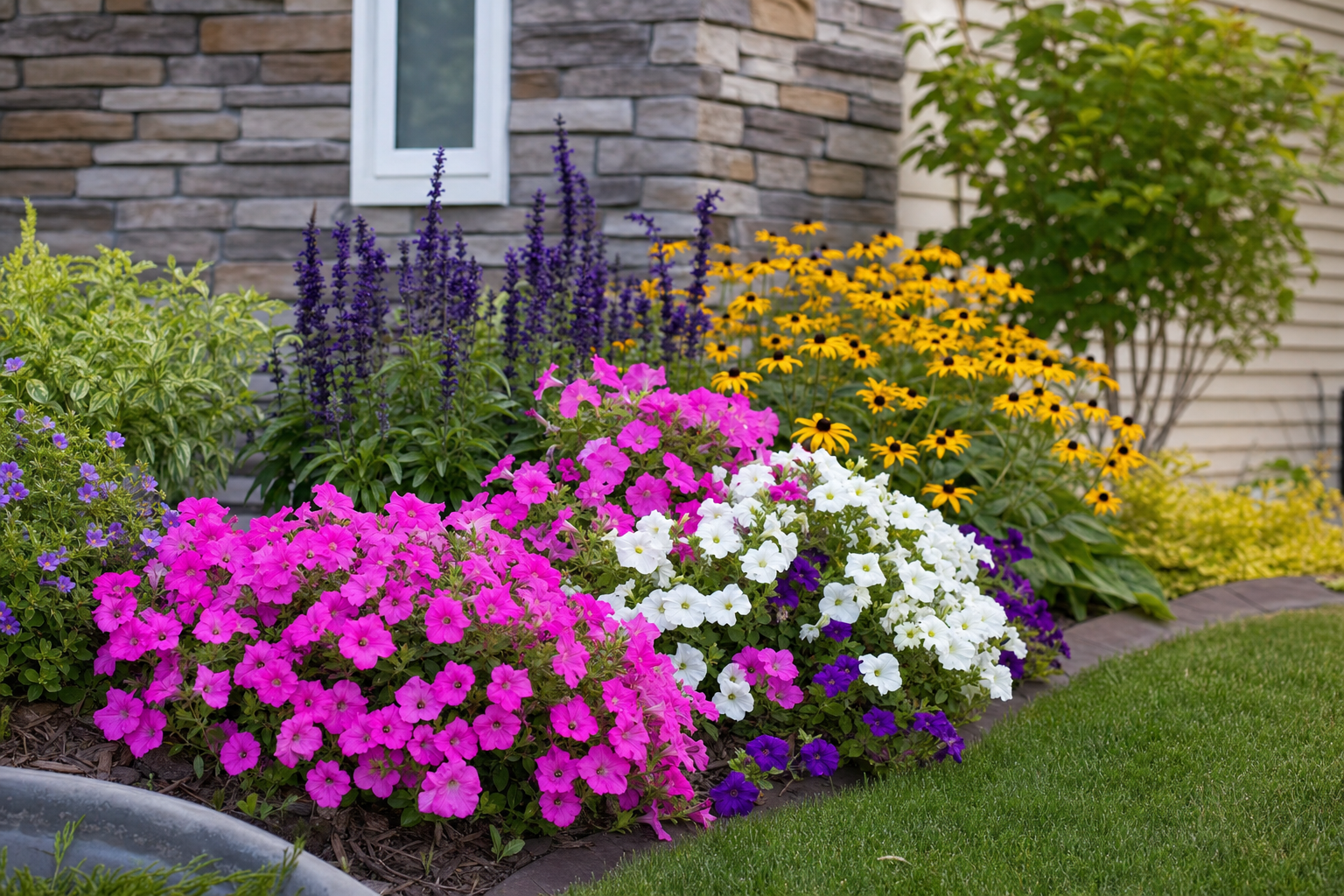
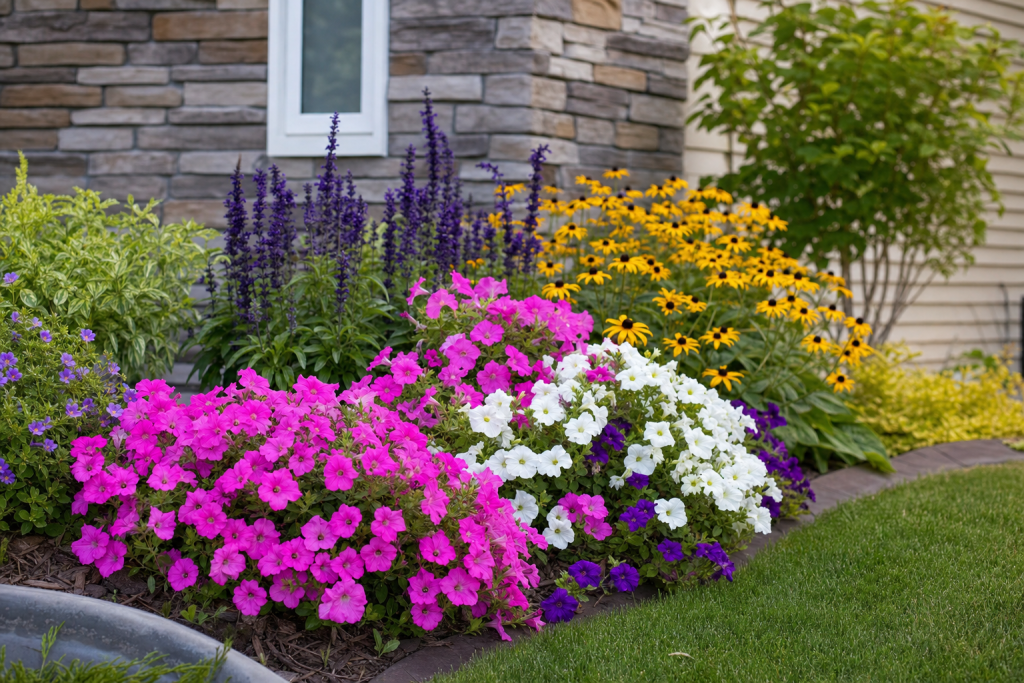
The answer for most Minot homeowners is not one or the other. It is both, used strategically. Perennials form the structural backbone of a well-designed bed. Coneflowers, black-eyed Susans, daylilies, and Siberian iris are all zone-appropriate and come back reliably once established. They anchor the bed visually and reduce replanting labor over time. The tradeoff is that each species blooms for three to six weeks, then goes quiet. A bed planted entirely in perennials will have gaps in color throughout the season.
That is exactly where annuals earn their place. We use them to fill those gaps, to add height variation, and to give homeowners the dense, continuous color they want from June through September. Planted into the open spaces between established perennials, annuals like angelonia, vinca, or lantana keep the bed looking intentional all season long. This approach also gives you flexibility. If a color scheme stops working or a new design direction comes up, annuals can change from year to year without disturbing the perennial structure underneath.
For properties focused primarily on curb appeal, annual-forward beds often make more sense because the visual payoff is immediate and predictable. For homeowners thinking about a five-year landscape plan, building a perennial foundation now is a smarter investment. Our plantings and softscapes work covers both directions depending on what stage your yard is in.
Homeowners who ask us about annual flowers vs perennial flowers Minot, ND properties are often surprised to learn that the soil and drainage situation on their specific lot matters as much as the plant selection itself. Two properties a few blocks apart can have meaningfully different drainage profiles, and that changes which plants will perform reliably and which will struggle by midsummer.
What Does the Installation and Maintenance Process Look Like?
Our team installs annual flower beds starting with bed preparation: clearing existing growth, amending the soil where needed, and confirming that drainage is adequate. In Minot’s heavier soils, we sometimes incorporate organic material to improve structure and help roots establish faster. We then plant at appropriate spacing for mature size, which matters more than most homeowners realize. Crowded annuals compete for moisture and airflow, which increases disease pressure through the summer.
Irrigation is a significant factor in whether annuals thrive or just survive. Consistent moisture, especially in July and August when Minot can go weeks without meaningful rain, is what keeps color dense and plants healthy. If your beds are not connected to an irrigation system, we factor that into the maintenance plan. Hand watering is inconsistent and often inadequate during heat stretches.
For perennial beds, the installation process is similar, but the timeline expectation is different. We set them, mulch them to retain moisture and suppress weeds, and then monitor through the first season. Our landscape maintenance plans include regular checks on plant health, and our team handles plant trimming, pruning, and fertilization as part of keeping established beds performing well. Weed pressure in Minot beds is real, and without consistent suppression, it competes directly with both annuals and perennials for water and nutrients.
The question of annual flowers vs perennial flowers Minot, ND yards comes up most often during our spring consultations, but the decisions made in fall, including mulching depth, plant cutback timing, and irrigation winterization, directly affect how well both plant types perform the following season. A complete maintenance plan accounts for both ends of the calendar.
Frequently Asked Questions
When is the right time to plant annual flowers in Minot, ND?
We typically plant annuals after the last frost risk has passed, which in Minot falls around mid-May. Planting too early exposes warm-season annuals to frost damage that can set them back significantly. By late May and into early June, soil temperatures have warmed enough for most annual varieties to establish quickly and begin producing color within a few weeks.
Do perennials actually come back reliably in Minot’s winters?
Zone-appropriate perennials do return reliably, but the selection matters. Plants rated for Zone 4 or colder handle Minot winters without issue. Plants rated for Zone 5 or warmer are a gamble. We only recommend and install perennials that are proven in this climate, and proper mulching before winter helps protect root systems through the hardest cold snaps.
How do I know if my flower beds have a drainage problem before planting?
The clearest sign is standing water that remains in or near your beds for more than 24 hours after a rain event. Minot’s clay soil is slow to drain, and low spots in a bed can stay saturated long enough to rot roots. If you are seeing this pattern, we recommend addressing the grading or drainage before investing in new plantings. Our team covers drainage corrections as part of our landscaping services.
Can I mix annuals and perennials in the same bed?
Yes, and for most Minot properties, that is the approach we recommend. Perennials provide structure and return each year, while annuals fill in color during the weeks when perennials are not blooming. The two work well together as long as the bed is designed with mature plant sizes in mind and irrigation is consistent enough to support both root systems through the summer.
July is when the gap between a well-planned bed and a struggling one becomes obvious in Minot yards. The annuals that went in with good soil prep and consistent water are hitting peak color right now. The ones that did not have that foundation are showing stress. If your beds are not performing the way you expected this season, the variables are almost always the same: drainage, irrigation consistency, and whether the plant selection matched what this climate actually demands. Those are problems with real solutions, and the right time to address them for next season is before the current one ends. If you have more questions about annual flowers vs perennial flowers Minot, ND landscapes specifically, our team is available to walk through your property and give you a plan that fits what you are actually working with.