French Drains in Minot, ND: How They Work and When Your Yard Needs One
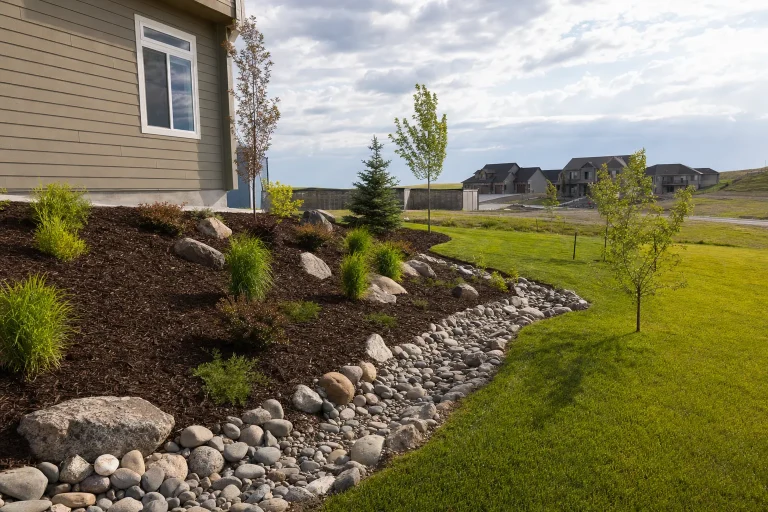
A lot of homeowners in Minot, ND come to us thinking they have a planting problem. They put in a new garden bed, added some shrubs along the foundation, maybe laid down fresh mulch, and within a season or two, the plants are struggling or dying outright. The soil stays wet too long after rain. Roots are sitting in standing water. What looks like a plant health issue is often a drainage issue, and that is where French drains come into the conversation.
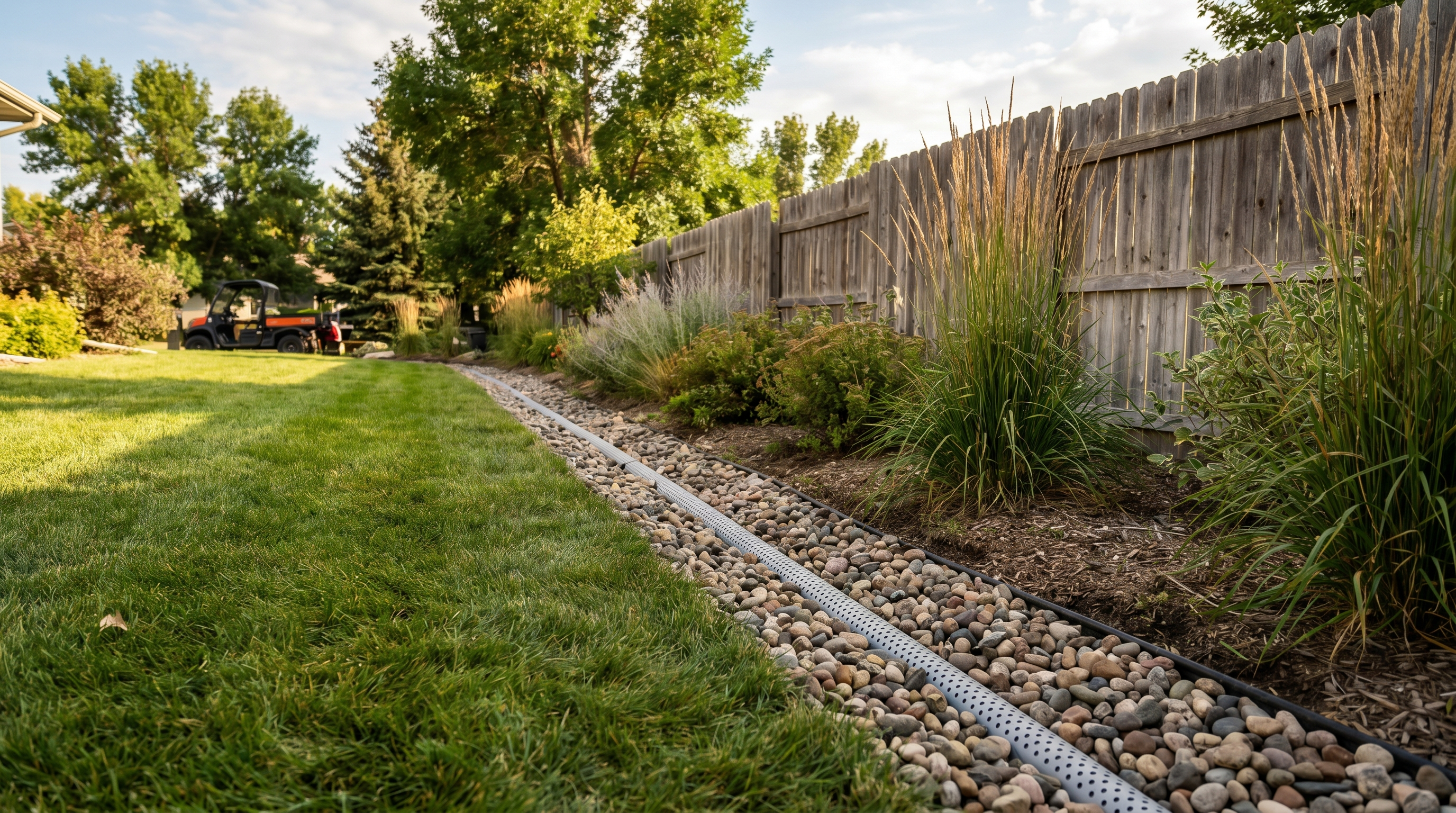
Minot sits on some of the heaviest clay soils in the region, a legacy of the ancient Lake Souris glacial basin, and that soil profile means water moves slowly no matter how well a yard is graded. Once we walk a property and see where water is moving, or more accurately, where it is not moving, the solution usually becomes much clearer.
What a French Drain Actually Does
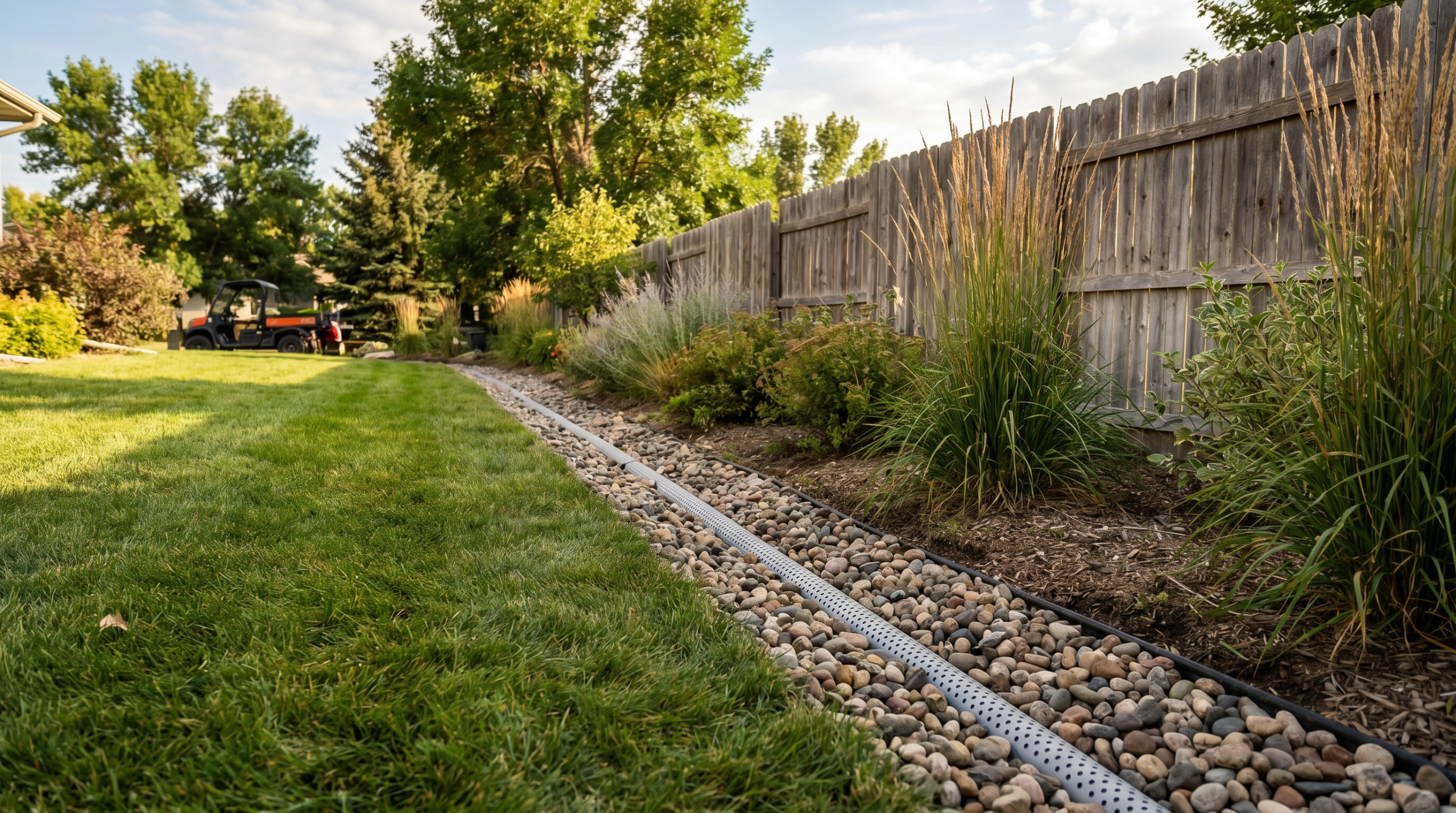
A French drain is a subsurface drainage system designed to intercept groundwater or surface runoff and redirect it away from problem areas. The basic components are a perforated pipe, a gravel-filled trench, and a filter fabric that keeps soil from clogging the system over time. Water enters the trench, moves through the gravel toward the perforated pipe, and flows by gravity to a designated outlet, usually a daylight point at a lower elevation on the property, a dry well, or a storm drain connection where code allows.
The reason this system works so well is that it addresses water at the source rather than waiting for it to become a surface problem. By the time you are seeing standing water in your yard or wet spots in your basement, the ground beneath your lawn has already been saturated for hours or days. Penn State Extension’s soil management guidance is a useful reminder that soil structure and drainage directly shape plant performance. A properly designed French drain intercepts that water before it pools, before it damages roots, and before it finds its way toward your foundation.
What makes French drain installation in Minot somewhat specific to this region is the soil profile. Much of the area sits on heavy clay or clay-loam soils left behind by glacial lake sediment. Clay drains slowly. It holds water near the surface and does not allow percolation at the rate most landscape plants need. That is why drainage problems here are not just about slope, they are also about soil structure.
How We Design and Install French Drains for Minot Properties
Every installation starts with a site assessment. We are looking at where water enters the property, where it collects, and where we can direct it to exit. Slope matters enormously here. A French drain needs enough fall to function by gravity, and we use proper measurements to confirm what the land is actually doing versus what it looks like to the eye. Yards can be deceptive, especially on flatter lots where water has few natural pathways.
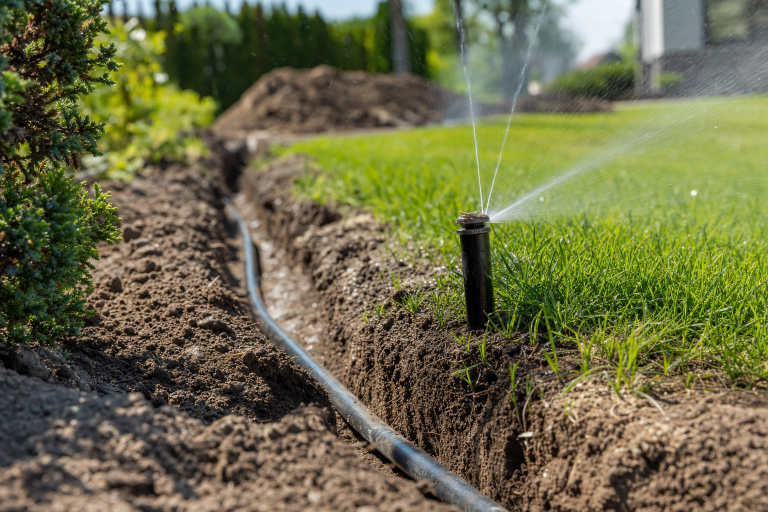
Once we have a drainage plan, we excavate the trench. Depth and width depend on the volume of water we are managing. We line the trench with filter fabric before adding clean washed gravel, then lay the perforated pipe, add more gravel over the pipe, fold the fabric over the top, and backfill with native soil. The fabric wrap is not optional. In clay-heavy soils, skipping it usually means the system silts in and stops functioning much sooner than it should.
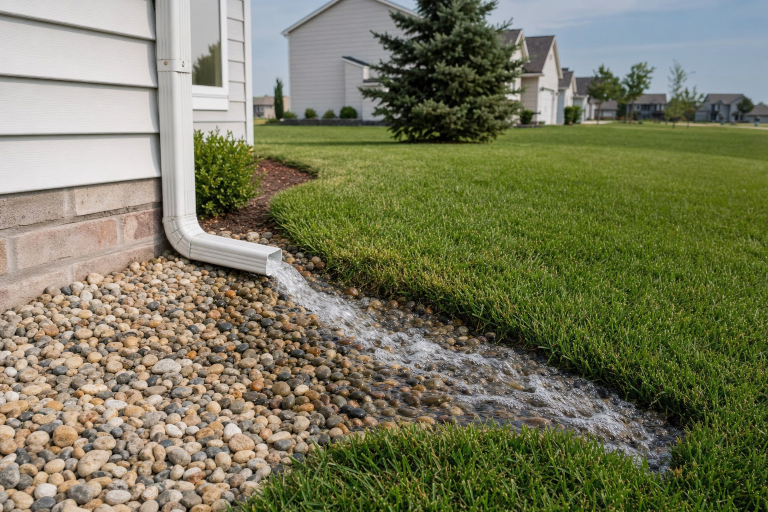
Outlet placement is the part homeowners often do not think about until we bring it up. The water has to go somewhere, and that somewhere needs to be a location where it will not create a new problem. The EPA’s stormwater guidance is a good baseline for understanding why runoff management needs a planned destination. We tie into existing storm infrastructure where possible, or we daylight the pipe at a low point in the yard with a pop-up emitter that opens under flow and closes when dry.
How to Know If Your Property Needs One
The most obvious sign is standing water that persists for more than twenty-four hours after a rain. But there are subtler indicators that point toward a drainage problem before it becomes a visible one. Soil that feels spongy underfoot in certain areas, grass that dies in patches that follow a low spot, efflorescence or moisture staining on a basement wall, and plants that consistently underperform despite proper care are all signals worth paying attention to. If you have been dealing with recurring lawn disease in the same areas of your yard, excess moisture in the soil is often a contributing factor.
French drains also come up frequently in the context of hardscaping projects. Paver patios and retaining walls both require proper drainage behind and beneath them to perform long term. We often integrate drainage work into those projects from the start rather than treating it as an afterthought. If you are planning any landscaping work this season and your yard has a history of wet spots, having a drainage assessment done before plants go in the ground is the smarter path.
The Best Time to Assess a French Drain Project
Spring is one of the better times to evaluate drainage in Minot because thawing ground and rain events reveal the problem areas clearly. That is also when we can confirm whether a French drain alone will solve the issue, or whether grading work needs to happen alongside it to give water a clear path to the drain in the first place.
If you would like one of our team members to walk your property and give you an honest assessment of what is happening with your drainage, contact Outdoor FX. We can help you sort out whether the problem is grading, saturation, runoff, or a combination of all three.