
7 Things to Know Before Scheduling Landscape Lighting Installation in Minot, ND
By Outdoor FX
Our earlier post on landscape lighting in Minot, ND covers why lighting matters for curb appeal and long winters. What it does not cover is the installation side, specifically what happens before the first fixture goes in the ground. If you are planning landscape lighting installation in Minot, ND this spring, these are the details that determine whether your system performs well or causes headaches down the road. Minot’s short growing season and extreme temperature swings make installation decisions matter more here than in most markets.
1. April Is One of the Best Windows to Start
Spring in Minot is a narrow but productive window for outdoor projects. Once the ground has thawed enough to trench wire runs, but before most landscaping has fully leafed out, it is easier to plan fixture placement without guessing where shadows will fall in July. North Dakota spring soil conditions can shift quickly, so timing the work around real thaw conditions matters. Our team can also coordinate lighting installation alongside other spring work like softscape planting or mulch installation, so the yard gets finished as a cohesive project rather than a series of separate visits.
2. Landscape Lighting Installation in Minot, ND Requires Freeze-Thaw Planning
Minot’s freeze-thaw cycle can do real damage to improperly installed lighting systems. Wire connections that work fine in September can fail by March if moisture gets into the junction and freezes. Our team uses waterproof wire connectors and buries cable at depths that account for local soil movement and frost exposure, not just the easiest trench depth. Fixtures themselves need to be rated for temperature extremes, not just moisture resistance.
3. Your Irrigation System and Your Lighting System Need to Be Planned Together
This is one of the most common oversights we see on properties that were lit by someone other than the team that installed the irrigation. Sprinkler heads and buried wire runs can end up in direct conflict, which creates problems during irrigation startups and repairs. If you already have an irrigation system or are planning to add one, our team maps both systems before any trenching starts so the two never interfere with each other. NDSU Extension’s lawn and landscape resources are also useful for understanding how water, soil, and plant health affect outdoor improvements in North Dakota.
4. Transformer Placement Affects the Whole System
The transformer is the backbone of a low-voltage lighting system, and where it gets mounted matters more than most homeowners expect. It needs to be close enough to an outdoor outlet to avoid voltage drop over a long run, but positioned so it is not directly in a sprinkler zone or exposed to heavy snow accumulation off a roofline. On properties near the Mouse River or in older neighborhoods like Roosevelt Park where exterior outlet placement can be inconsistent, we sometimes need to work with an electrician to add a dedicated outdoor circuit before installation begins.
5. The Number of Fixtures Is Not the Most Important Spec
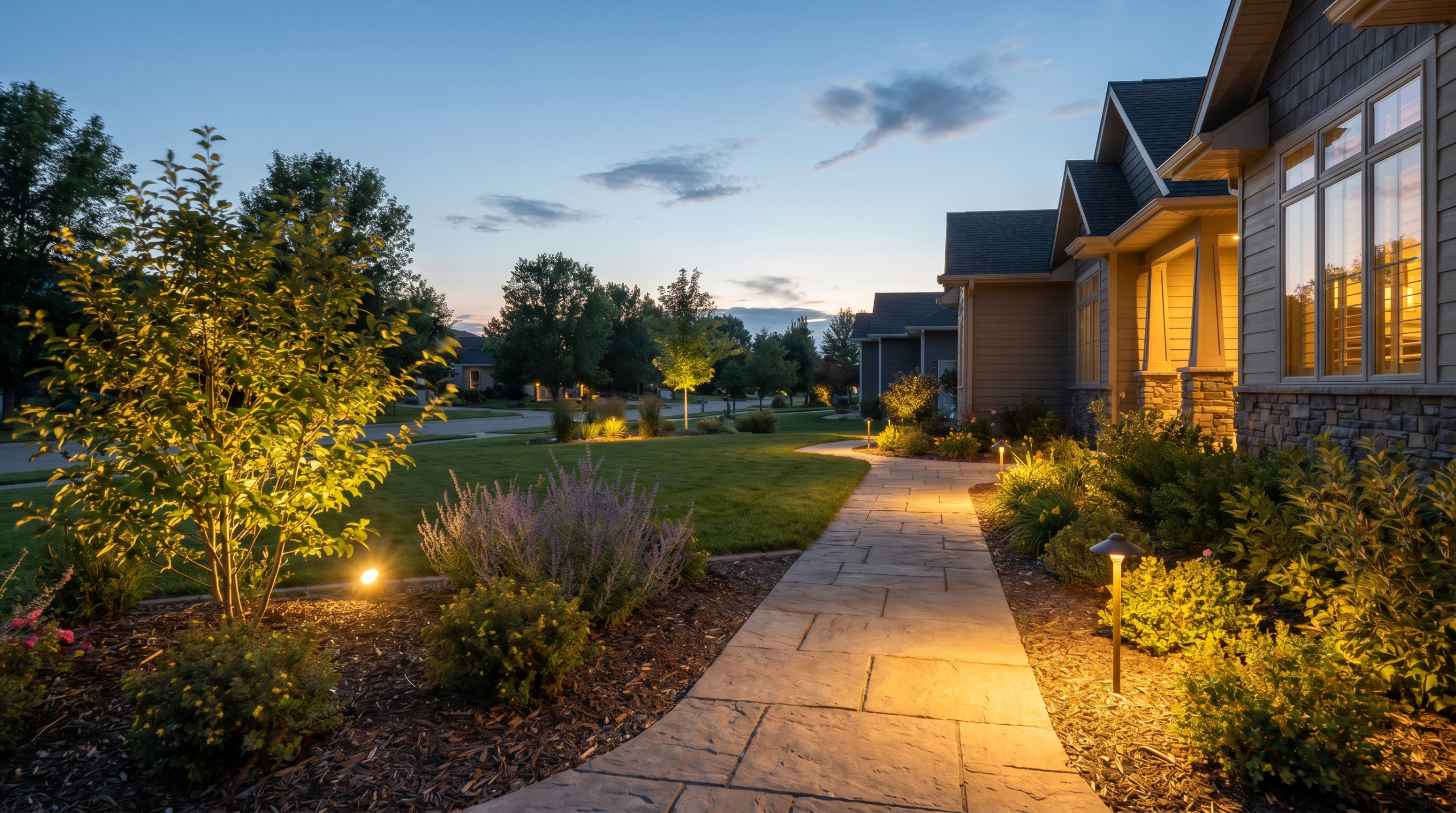
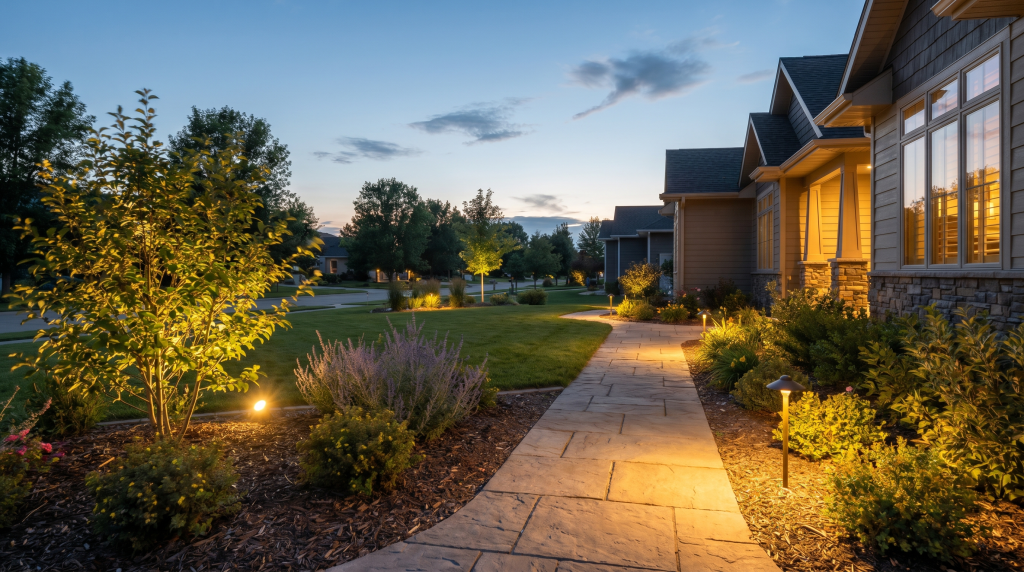
We hear a lot of homeowners ask how many lights they need, but the more useful question is what the lighting is meant to accomplish. Path lighting, uplighting on trees, accent lighting on a paver patio or retaining wall, and security lighting around a garage all have different fixture types, beam angles, and wattage requirements. A system with eight well-placed fixtures will outperform one with twenty that were installed without a lighting plan. Our team designs before we install, which keeps the final result from looking cluttered or unbalanced.
6. Hardscape Features Change What Is Possible
If you have an existing patio, seating wall, or outdoor staircase, those features open up in-grade and hardscape-integrated lighting options that are not available on a plain lawn. Step lights, cap lights on seating walls, and in-ground uplights set into a paver field all require the right prep work during the hardscape installation phase. Retrofitting them into existing hardscape is possible but more labor-intensive. If you are planning both a hardscape project and lighting, combining them is almost always the more cost-effective path.
7. Ongoing Maintenance Is Part of the Investment
Landscape lighting installation in Minot, ND is not a one-time project you walk away from. Fixtures shift over time as soil settles, bulbs dim or fail, and wire connections can degrade after several freeze-thaw cycles. An annual checkup, typically done in spring alongside other landscape maintenance tasks, catches those issues before they become system-wide problems. We also recommend a quick inspection after irrigation winterization each fall, since that is when we are already working around the same buried infrastructure.
One More Thing: Permits and HOA Rules
Most low-voltage landscape lighting is straightforward, but line-voltage systems or any work that involves adding a new electrical circuit can require extra review. Some HOA communities in the area also have restrictions on fixture styles or light color temperature. Before you commit to a design direction, check current City of Minot residential permit guidance and confirm HOA rules if they apply. Our team handles this research as part of the project scoping process so nothing catches you off guard.
Frequently Asked Questions About Landscape Lighting Installation in Minot
When is the best time to schedule landscape lighting installation in Minot, ND?
April and early spring are often strong windows because the ground is workable and many planting beds have not filled in yet. That makes fixture placement, trenching, and coordination with spring landscape work easier.
Does landscape lighting installation require a permit in Minot?
Many low-voltage lighting projects are simple, but any project involving a new electrical circuit or line-voltage work should be reviewed before installation. We confirm permit and electrical requirements during project planning.
Can lighting be installed with an existing irrigation system?
Yes. The key is mapping sprinkler heads, valves, and buried wire routes before digging. Planning both systems together prevents conflicts during future irrigation startups, repairs, and winterization.
Can lights be added to an existing patio or retaining wall?
Yes, but retrofitting hardscape lighting is usually more labor-intensive than planning it during the original installation. If a hardscape project is already on your calendar, it is usually smarter to plan lighting at the same time.
April is the right time to get landscape lighting installation in Minot, ND on the schedule. Projects booked in spring are installed while the yard is being refreshed anyway, which means less disruption and a system that is fully tested before the short summer nights arrive. If you are ready to talk through what a lighting plan would look like for your property, reach out to our team here.