Landscaping in Minot, ND: What It Really Takes to Build a Yard That Lasts Here
If you’ve ever dug more than six inches into a typical Minot, ND yard, you already know what we’re dealing with. That heavy, dark clay doesn’t give easily, and when it’s wet, it holds water like a sponge. After a hard rain, low-lying yards near the Souris River basin or in older neighborhoods like Roosevelt Park can sit saturated for days. It’s not a drainage problem you can solve with a bag of topsoil from the hardware store. Real landscaping Minot ND homeowners can count on has to start with understanding what’s actually underneath the grass and how this region behaves across all four seasons.
Site planning is stronger when it accounts for local soil and runoff patterns, so resources like the USDA Web Soil Survey and EPA stormwater guidance can help frame the right questions before work begins.
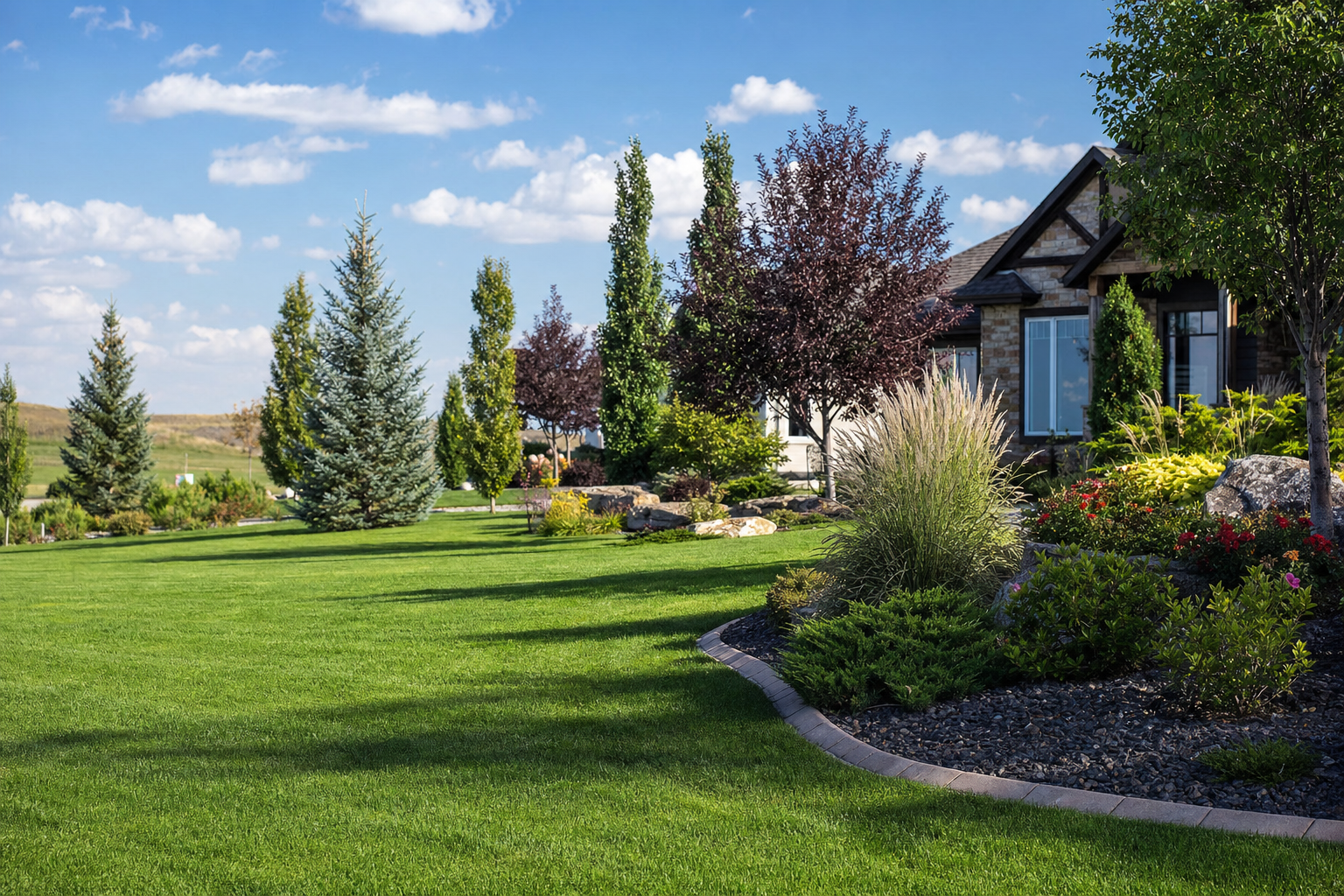
Why Minot Soil and Climate Change Everything About Landscaping Minot ND Projects
Most national landscaping advice is written for places with loamy, forgiving soil and winters that don’t regularly drop to minus twenty. Minot doesn’t fit that mold. Our growing season is short, our freeze-thaw cycles are aggressive, and the clay-heavy soils across much of Ward County compact easily and drain poorly. That combination creates real problems for homeowners who plant the wrong species, skip proper grading, or install hardscaping without accounting for frost heave.
We’ve seen paver patios buckle after a single winter because the base wasn’t built deep enough. We’ve seen newly planted trees struggle or die because their root zones stayed waterlogged through May. Proper landscaping in Minot means accounting for all of that upfront, not patching problems after the fact. When we design a softscape or plan a planting bed, we’re thinking about soil amendment, drainage slope, and plant hardiness for Zone 4 conditions, not Zone 6 assumptions someone copied from a gardening blog.
Late-season soil saturation is a recurring pattern across the city each spring. If your yard is still holding standing water in April, that’s a grading or drainage issue that will only get worse through the summer storm season. Our team handles French drains, retaining walls, and grading work specifically designed for these conditions.
The Neighborhoods We Know and the Challenges They Share
Different parts of Minot come with different landscape headaches. Properties along South Broadway and out toward the newer developments near the southwest edge of town tend to have more fill soil from construction, which drains unevenly and compacts faster than undisturbed ground. Older yards near Oak Park or in the established neighborhoods off 16th Street Southwest often have mature trees with aggressive root systems that compete with lawn areas and create uneven grade over time.
We also work regularly in areas closer to the Minot Air Force Base corridor, where newer subdivisions have shallow topsoil over compacted subgrade. Sod laid over that kind of base without proper soil prep will thin out and struggle with drought stress by midsummer. That’s why our lawn care and plant care programs include soil evaluation before we recommend any seeding, overseeding, or sod installation. A healthy lawn in Minot starts below the surface.
Landscaping Minot ND residents depend on isn’t just about curb appeal. It’s about building outdoor spaces that function well through freeze, thaw, flood risk, and the kind of wind that comes across the plains with nothing to stop it.
Building Outdoor Spaces That Survive a Minot Winter
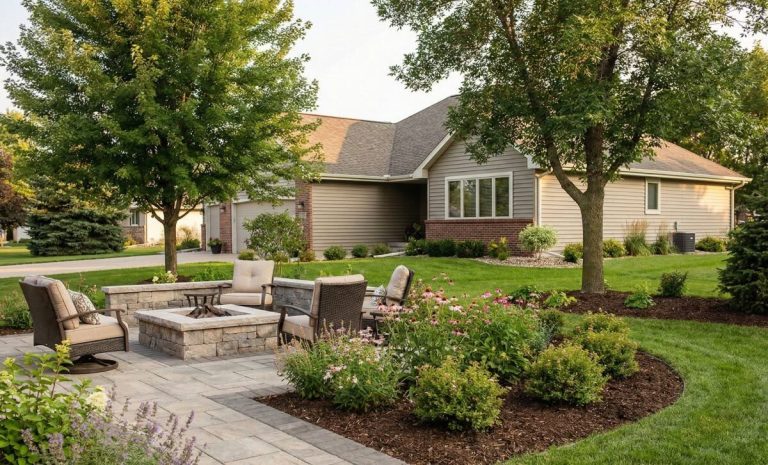
One of the most common questions we get in April is about hardscaping: patios, walkways, fire pits, seating walls. People are ready to enjoy their yards after a long winter and want to add something permanent. We love that energy, and we also want to make sure what we build lasts more than a season or two.
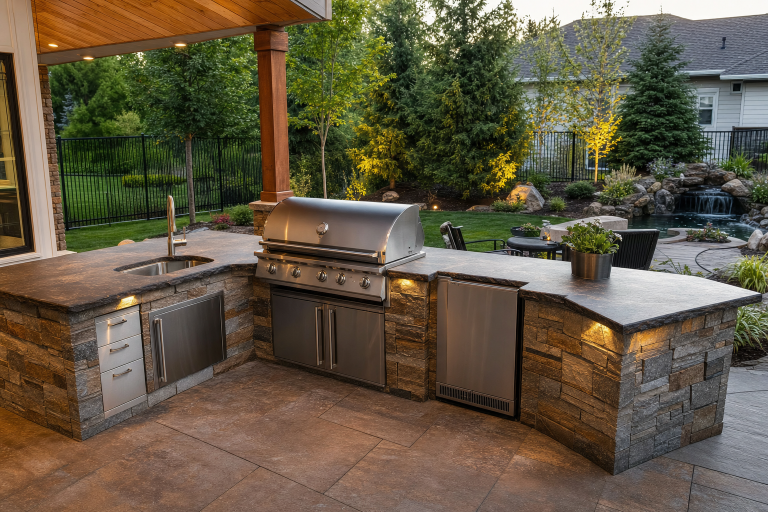
Paver installations in this climate need a deeper compacted base than you’d use in a milder region, typically six to eight inches of properly graded aggregate, to handle the ground movement that comes with our frost depth. Retaining walls need to be built with drainage behind them, or the freeze-thaw pressure will push them out within a few years. Fire pits and outdoor kitchens need to be positioned with wind direction in mind, because a southwest-facing fire feature in Minot is going to be nearly unusable on most spring and fall evenings.
We’ve also written about how landscape lighting in Minot needs to be wired and installed with winter durability in mind, since fixtures that aren’t rated for our temperature swings won’t last. The same thinking applies to every element of an outdoor space here.
Irrigation, Lawn Care, and the Full-Season Picture
A lot of homeowners in Minot manage their lawn through summer without an irrigation system and then wonder why it thins out by August. Our summers can be dry, and the clay soils that hold too much moisture in spring can crack and repel water by July. A properly designed irrigation system with spring startup and fall winterization isn’t a luxury here. It’s one of the most practical investments you can make in your lawn’s long-term health.
We also deal with specific lawn diseases that show up in North Dakota yards, including frog eye and other fungal issues that thrive in our wet spring conditions. Our lawn disease treatment programs are built around what actually shows up in this region, not generic national protocols. If you want a deeper look at setting your lawn up right from the start of the season, our spring lawn care checklist for North Dakota covers the full sequence.
For a complete look at everything we offer, visit our full services page or reach out directly to talk through what your yard needs this season.
The landscaping Minot ND homeowners actually trust gets built on local knowledge, not generic templates. We’ve worked these soils, watched these yards through hard winters, and know what holds up and what doesn’t. That’s the difference between a yard that looks good in June and one that still looks good five years from now.
April in Minot is short. The window between frozen ground and the heat of summer goes fast, and the yards that come out ahead are the ones where someone started planning before the snow was fully gone.