Erosion Control in Minot, ND: What’s Actually Happening to Your Yard and How We Fix It
A lot of homeowners in Minot, ND first notice they have an erosion problem while they’re thinking about something completely different. They contact us about integrating a new patio or walkway into their yard, and once we start looking at grades, drainage patterns, and the region’s clay-heavy Missouri Slope soils, the real issue becomes clear: the ground itself is shifting. Soil is moving off slopes, pooling where it shouldn’t, or washing out from around plant beds every time it rains. That’s the moment a design conversation becomes a conversation about erosion control Minot ND. The two are connected more often than most homeowners realize, and understanding why helps explain what a proper fix actually involves.
Why Erosion Is a Specific Problem in Minot’s Landscape
Minot sits in a region where the soil profile, climate patterns, and topography all work against each other in ways that accelerate erosion. The Missouri Slope region surrounding the city is characterized by clay-heavy soils that compact easily, shed water rather than absorbing it, and crack during dry spells. When spring snowmelt arrives, large volumes of water move across frozen or saturated ground with nowhere to go. That water picks up soil particles and carries them downhill, off slopes, and away from plant root zones.
Neighborhoods built on higher ground near the Souris River valley are particularly prone to this. Yards that back up to any kind of grade change, even a subtle one, tend to show erosion damage along fence lines, at the base of slopes, and in areas where lawn meets a bed or hardscape edge. Add to that the wind exposure Minot is known for, and you have a combination of forces that work on bare or thin-coverage soil year-round. Erosion control Minot ND isn’t a one-size-fits-all service. The approach we take depends on what’s driving the movement and where the damage is concentrated.
How We Diagnose Erosion Control Minot ND Needs Before We Do Anything Else
Before any material goes in the ground, our team walks the property and reads what the landscape is telling us. We’re looking at slope angles, existing drainage paths, soil composition, ground cover density, and how water enters and exits the property during a rain event. We also look at what’s already in place, because sometimes a retaining wall, a planting bed, or even a poorly positioned downspout extension is contributing to the problem.
This diagnostic phase matters because erosion has different root causes that require different solutions. Surface erosion from water runoff is handled differently than rill erosion, where water concentrates into small channels and cuts into the soil. Sheet erosion across a flat, compacted area calls for a different response than slope erosion on a steep grade. Getting this wrong means spending money on a fix that doesn’t hold. Our hardscaping and landscaping teams work together on these assessments because the solution often involves both structural elements and plant-based stabilization.
The Tools and Methods We Use to Stop Soil Movement
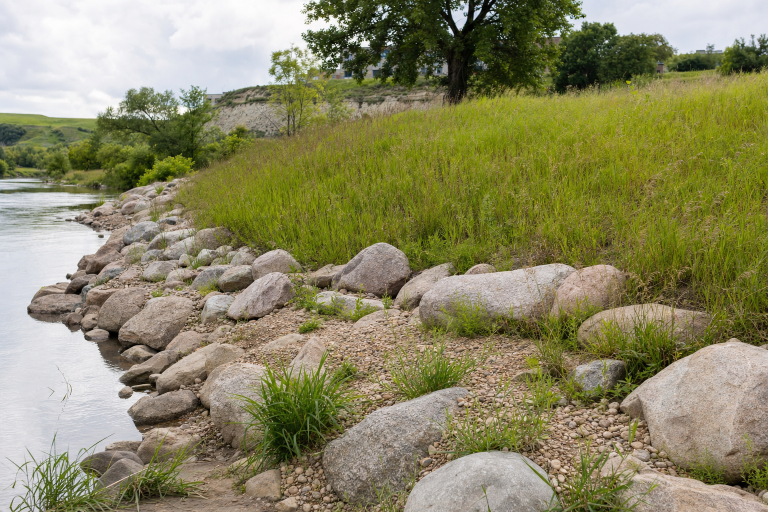
Effective erosion control typically layers multiple approaches. On steeper slopes, we often start with a structural solution. Retaining walls built from segmental block or natural stone interrupt the flow of water and hold soil in place at grade changes. These walls need proper drainage behind them, which means we’re installing gravel backfill and drainage fabric as part of the build, not as an afterthought. A wall that doesn’t drain correctly will heave and fail within a few seasons in North Dakota’s freeze-thaw cycles.
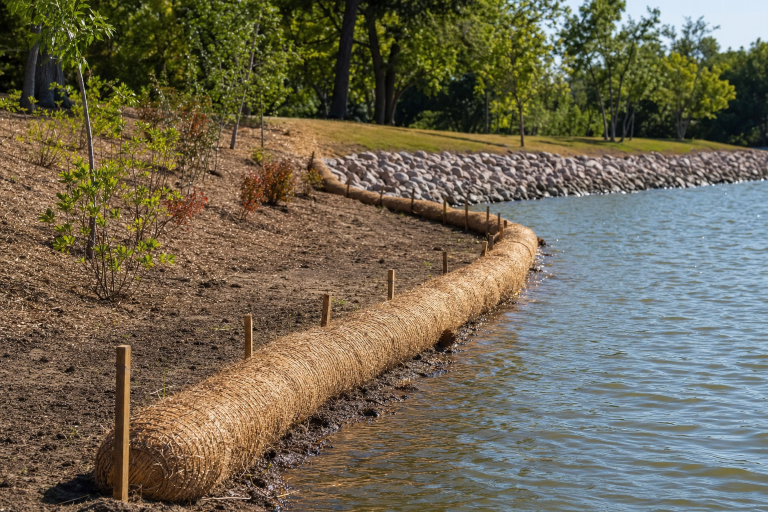
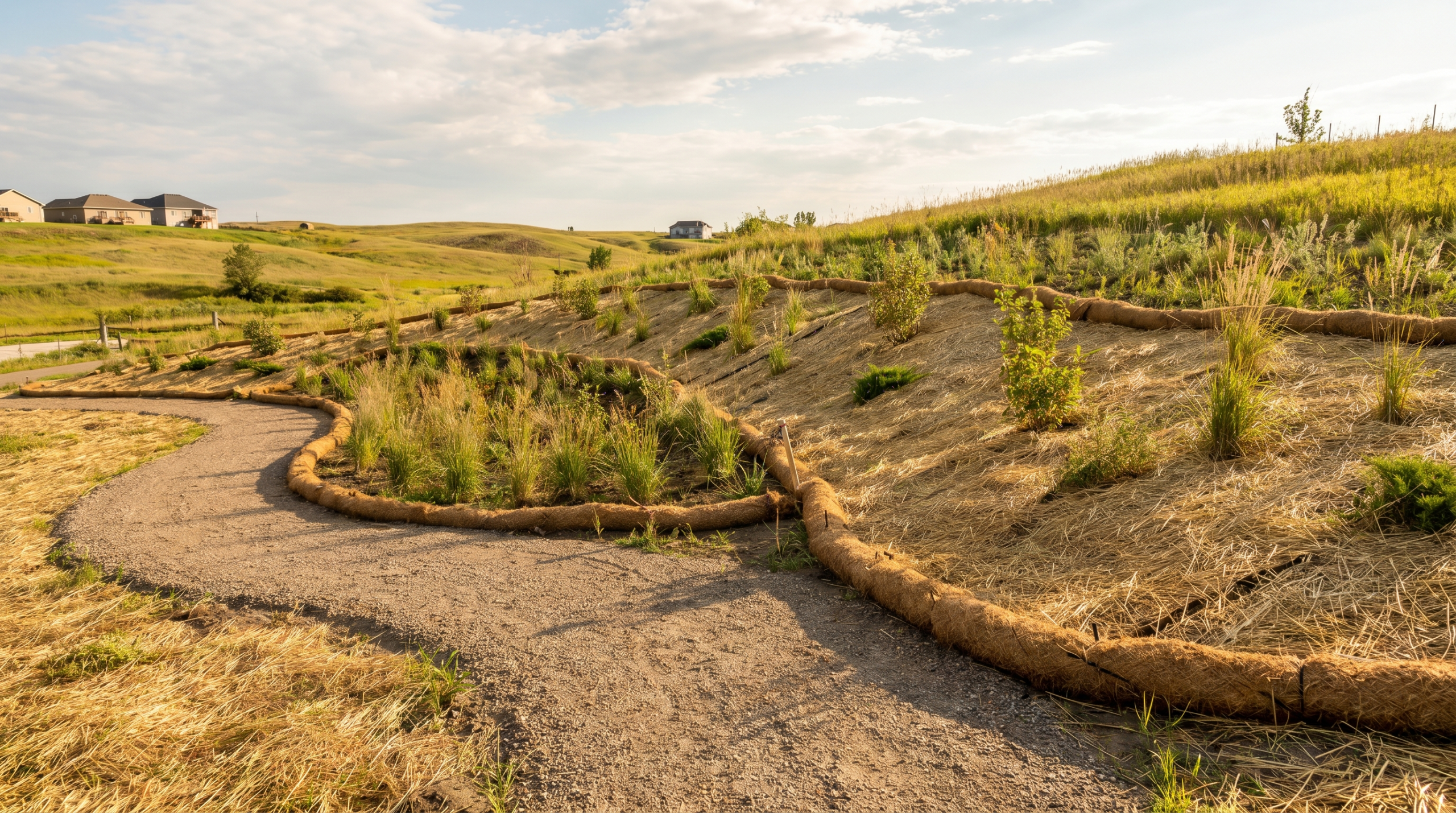
For areas where the slope is moderate and the primary issue is bare or thin ground cover, we use a combination of erosion control blankets, hydroseeding, and strategic plantings. Erosion blankets hold the soil surface in place while seed germinates and root systems establish. Hydroseeding applies a slurry of seed, mulch, and tackifier that bonds to the soil and accelerates germination. Once root systems are established, they do the long-term stabilization work that no blanket or wall can do on its own. For larger bare areas or damaged turf zones, sod installation provides immediate ground cover and root anchoring faster than seeding allows.
In cases where water concentration is the primary driver, we address drainage directly. French drains, swales, and regrading redirect water away from vulnerable areas before it builds up enough velocity to carry soil. Our post on French drains in Minot, ND covers that process in detail if you’re dealing with standing water alongside your erosion issues. Sometimes an irrigation system adjustment is also part of the picture, particularly when overwatering or poor head placement is saturating soil near slopes or beds.
How to Know If Your Property Needs Erosion Control Now
There are a few reliable signs that erosion is actively affecting your property. Exposed tree roots are one of the clearest indicators. If roots that should be underground are now visible, soil has moved away from them. Bare patches that reappear every spring despite reseeding efforts, soil deposits collecting at the base of a slope or along a fence line, and small channels forming in lawn or bed areas after rain are all signs that surface stability is compromised.
Thinning turf on slopes is another pattern we see regularly. Grass on a grade that never seems to thicken up, even with fertilization and overseeding, is often fighting a losing battle against soil movement. The seed and the topsoil it needs are washing away before the lawn can establish. Addressing the erosion directly, rather than continuing to reseed, is the more effective path. Our landscape maintenance team often identifies these patterns during seasonal cleanups and can flag them before they become larger structural problems.
May is actually one of the better times to schedule erosion control Minot ND work. The ground has thawed, runoff patterns from snowmelt are still visible, and there’s enough of the growing season left to establish seed or plant material before summer heat sets in. Waiting until fall means another full cycle of freeze-thaw damage before anything gets resolved. Reach out through our contact page to schedule a site evaluation and get a clear picture of what your property actually needs.