What North Dakota Homeowners Should Know About Winter Deicing
January in North Dakota is relentless. When temperatures across Minot, Williston, and the surrounding region drop well below zero, keeping driveways and sidewalks safe becomes one of the most pressing tasks a homeowner faces. Our snow removal and deicing services are built specifically for these conditions. And reaching for the nearest bag of ice melt at the hardware store, while tempting, can quietly cause expensive damage to your concrete, your lawn, and even your pets, damage that often doesn’t show up until the snow clears in spring.
Choosing the best ice melt for driveways and sidewalks is more nuanced than most people expect. The product type, application rate, and timing all affect how well it works, and how much harm it does to the surfaces and landscaping around it. Understanding those factors is the first step toward keeping your property safe without creating a new set of problems.
Not All Deicing Products Work the Same Way
There are several deicing options available, and the differences between them matter quite a bit for North Dakota winters. Here’s a practical overview:
| Product | Effective Down To | Safe for Concrete? | Pet-Friendly? | Safe for Plants? |
| Rock Salt (Sodium Chloride) | ~20°F | No | No | No |
| Calcium Chloride | -25°F | Moderate (use sparingly) | No | No |
| Magnesium Chloride | -13°F | Better than rock salt | Moderate | Moderate |
| Potassium Chloride | ~25°F | Yes | Yes | Yes (low doses) |
| Calcium Magnesium Acetate | ~20°F | Yes | Yes | Yes |
| Urea-Based Products | ~15°F | Yes | Yes | Moderate |
The right product depends on the temperature at application, what surfaces are nearby, and what pets or plantings are part of your property. Using the wrong product, or too much of the right one, is where most of the damage happens.
What Rock Salt Does to Concrete and Landscaping
Rock salt is the most widely used deicing product, but it carries real risks for property owners in this region.
On concrete surfaces:
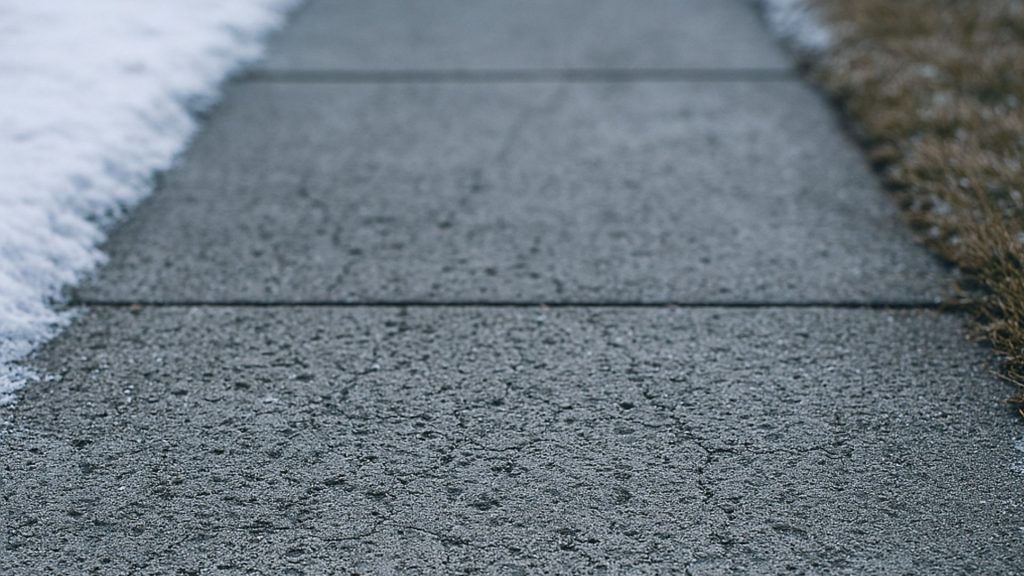
- Moisture seeps into small cracks, refreezes, and expands
- Repeated cycles cause surfaces to crack and spall over time
- Visible pitting or flaking after winter is a common and costly result
On grass and plants:
- Salt buildup draws moisture away from root systems
- Residue lingers in the soil well into the growing season
- Established garden beds, sod, and plantings near walkways are especially vulnerable
For homeowners who’ve invested in professional landscaping and softscapes, this is worth paying attention to before it becomes a spring repair project.
The Temperature Problem With DIY Deicing
One of the most common mistakes homeowners make is applying a product that isn’t actually working in the conditions they’re dealing with. Standard rock salt becomes largely ineffective below 15°F to 20°F — a threshold North Dakota regularly crosses in January. When temperatures are well below zero, applying rock salt does very little other than leave chemical residue on your surfaces.
Calcium chloride handles extreme cold considerably better, staying effective down to -25°F. But at high concentrations, it can irritate pets’ paws, stress nearby plants, and still cause surface damage when overapplied. In communities like Bottineau, Rugby, or Watford City, where overnight temperatures can bottom out quickly, having the right product matched to the right conditions isn’t always straightforward for the average homeowner.
This is where professional deicing makes a meaningful difference. Rather than guessing at a hardware store, a trained crew applies the appropriate product for the actual forecast, at the right rate, and at the right time, before or during a storm, not after the ice has already set.
Overapplication Is a Bigger Problem Than Most Realize
More product doesn’t mean better results. In fact, overapplication is one of the leading causes of concrete deterioration and lawn damage in residential settings. Here’s what controlled application looks like in practice:
- Pre-treating surfaces before a storm prevents ice from bonding to concrete, which reduces the total amount of product needed overall
- Using measured application rates limits chemical exposure to surfaces and soil
- Clearing residue after temperatures rise keeps salt from working into the soil near lawn edges and plant beds
- Keeping product away from storm drains protects surrounding soil and water quality
When homeowners apply product themselves, these details often get skipped — especially during or after a demanding storm. Professional deicing accounts for all of them consistently.

Protecting Your Concrete and Landscaping This Season
Beyond the deicing product itself, a few consistent habits help reduce winter damage to your property.
- Seal concrete driveways before winter. A penetrating sealer reduces moisture absorption and helps surfaces hold up against repeated freeze-thaw cycles.
- Remove snow promptly. Less snow sitting on a surface means less opportunity for ice to form and bond.
- Use plastic shovels where possible. Metal edges can chip concrete, particularly in extreme cold.
- Keep sand or kitty litter on hand for light ice conditions. These add traction without chemical risk to surfaces or nearby plants.
These steps work best alongside a consistent deicing approach rather than as a replacement for one. If your lawn or plant beds took a hit this season, our lawn and plant care services can help with recovery once spring arrives.
Why Professional Deicing Matters for North Dakota Properties
Managing winter safety on a residential property through a full North Dakota winter takes real time, physical effort, and product knowledge. For homeowners balancing work and family through the coldest months of the year, professional snow and deicing services are a practical solution, not just a convenience.
When we handle deicing for a property, we’re choosing the right product for the forecast conditions, applying it at rates that protect surfaces and landscaping, and showing up consistently. That means not just after the worst storms, but throughout the season. Learn more about our team and how we work. That reliability is what keeps concrete in good shape, keeps yards from absorbing excess chemical runoff, and keeps families safe on walkways and driveways throughout the season.
We work with homeowners across Minot,Williston,Watford City, Bottineau, Rugby, and the surrounding region. If you want to see how we can support your property this winter, see our winter property services here.
Getting through January without injuries, surface damage, or a spring lawn recovery project is the goal. The right deicing approach, handled consistently and correctly, makes that outcome a lot more realistic.
Reach out to our team at (701) 847-4395 or visit outdoorfxnd.com to get started.
Frequently Asked Questions
What is the best ice melt for driveways and sidewalks in North Dakota?
In North Dakota’s extreme cold, calcium chloride is one of the most effective options because it continues working in temperatures as low as negative 25 degrees. The best product also depends on the surface material, nearby landscaping, and whether pets use the area. A professional deicing service can match the correct product to forecast conditions and surface needs. Learn more about our snow and deicing services.
Can ice melt damage concrete driveways and sidewalks?
Yes. Rock salt and high concentration chloride products can contribute to freeze and thaw damage that leads to cracking and surface flaking over time. Applying the correct product at the proper rate and sealing concrete before winter can reduce long term damage.
Is there an ice melt that is safe for pets and grass?
Products made with potassium chloride, magnesium chloride, or calcium magnesium acetate are generally safer for pets and turf than traditional rock salt. Always review the label for sodium chloride content, since some products marketed as pet friendly still contain high salt levels that can harm grass and plants. If winter damage occurs, lawn and plant care services can help with recovery in spring.
At what temperature does ice melt stop working?
Standard rock salt becomes much less effective below about 15 to 20 degrees, which North Dakota frequently experiences in midwinter. Calcium chloride remains active down to negative 25 degrees, making it a more dependable option during severe cold in areas such as Minot, Williston, and Watford City.
When should I hire a professional for snow and ice management?
If winter safety is consuming significant time, if you are unsure which products to use, or if past winters have resulted in concrete or lawn damage, professional snow and ice management may be a good choice. Consistent and properly applied deicing helps protect surfaces and reduces long term repair costs while keeping your property safer.